Horizontal Scaling Strategies for Agent Workload Bursts
Distributed agents need sub-minute scaling, session awareness, and careful memory management.

Agent workloads break the two assumptions that every horizontal scaling model depends on: predictable arrival rates and stateless request units. This piece asks what a scaling architecture needs to look like when it's built from the ground up for a workload that idles for an hour and then floods a system with hundreds of concurrent tool calls.
Why agent workloads are structurally different from every compute pattern horizontal scaling was built to handle
Picture a sustained training run alongside an agent set up to watch for a scheduled trigger. The demand curve for an agent fleet looks less like a tide and more like a series of unannounced floods.
Layer onto that a multiplier effect: a single user objective can trigger dozens of sequential API calls as the agent plans a task, retrieves data, calls one or more tools, and evaluates its own output before deciding on a next step. Multiplied across a burst of concurrent sessions, they turn into real cost overruns. This compounding pattern is the second structural break, sitting right alongside the unpredictability of arrival rates, and it gets a fuller treatment later when the discussion turns to KV-cache growth.
GPU cloud, as an industry, was not built with this pattern in mind. Inference workloads, and agent workloads most of all, favor scaling out: smaller deployments spread across more locations, placed close to where requests originate, to keep latency manageable. These are different topologies solving different problems, and a platform tuned for one doesn't automatically serve the other.
The four infrastructure capabilities agent burst patterns require that most platforms lack natively
Putting a production agent deployment under real traffic exposes four gaps in general-purpose GPU cloud, and each one makes the others worse once the workload bursts.
The first is elastic allocation at sub-minute granularity. Agents spend far more time idling than they spend actually running inference, so billing that charges by the second and scales to zero between requests is close to a precondition for the economics to work at all, since a platform charging for reserved blocks of time will bill heavily for periods when the agent is doing nothing.
The second is always-resident model loading. If you cold-start a model from network-attached storage, it takes long enough to break a live agent loop, so you can't treat agents as stateless serverless functions that spin up fresh on each call.
The third is session-aware scheduling. The model holds its VRAM allocation the entire time the tool call runs, which raises the minimum VRAM footprint compared to simple stateless single-turn inference. That also means naive bin-packing across workers isn't safe, because it assumes any GPU can take any new request, when a worker that looks free might actually be holding state for a paused session.
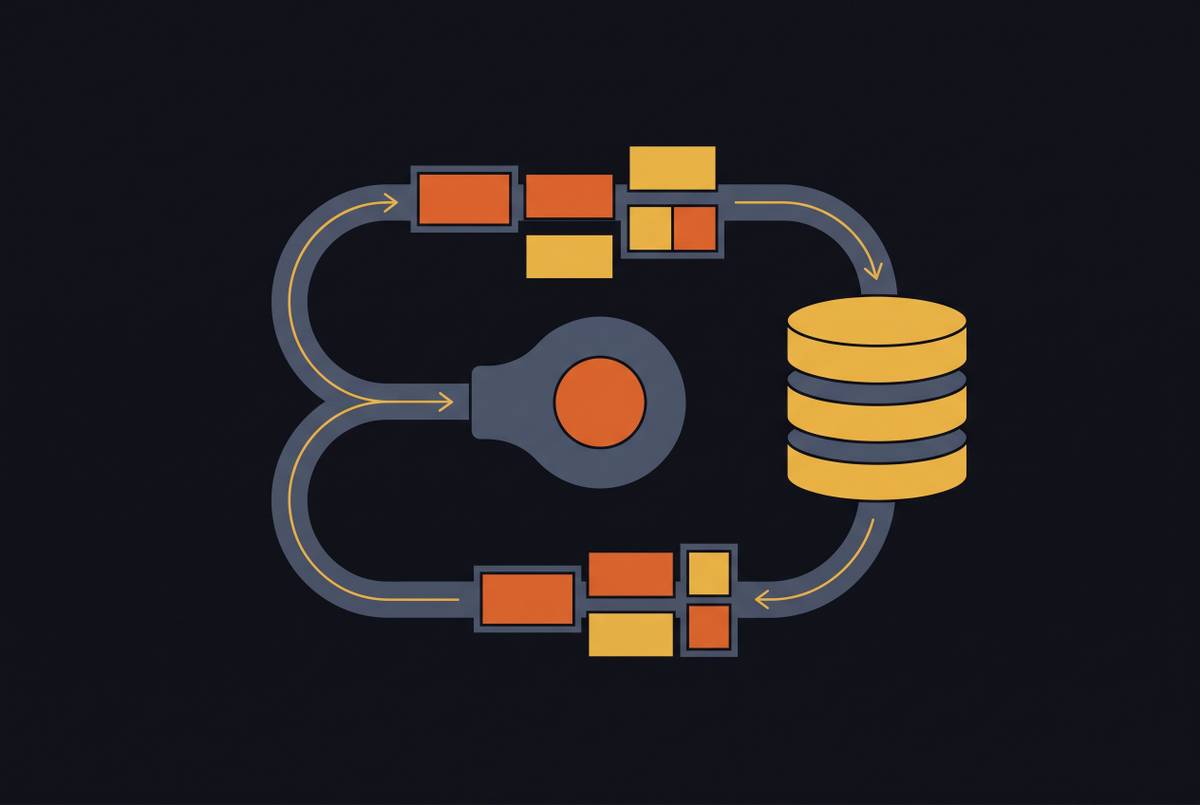
One structural insight explains all four: the inference layer and the orchestration layer scale independently and need to be treated that way. GPU cloud hosts inference. Teams that treat these as one layer tend to over-provision whichever one is easier to scale and under-build the other, which produces either agents that respond slowly or GPU bills that run far ahead of actual usage.
KV-Cache Growth and the VRAM Management Problem
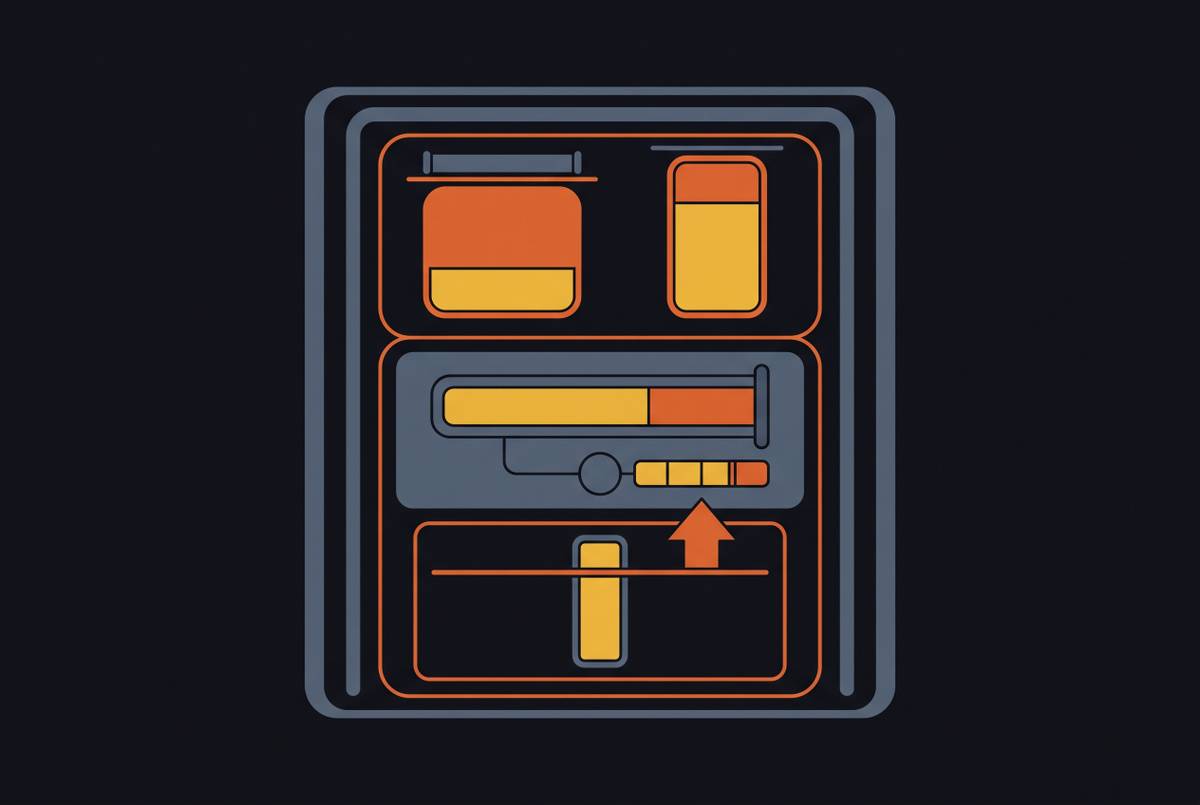
The single hardest constraint in agent burst scaling is the KV-cache, and it changes what "scaling" even means for this workload. In stateless inference, memory pressure tracks request volume: more requests, more memory used, roughly in proportion. Agent sessions behave differently, because memory pressure grows with how long the session has been running, not just with how many requests have come in.
As an agent works through a complex task, it has to hold onto earlier instructions, the intermediate steps of its own reasoning, and whatever context it retrieved earlier in the session. Without careful memory management, a single complex agent task can exhaust an 80 GB GPU on its own, forcing the system to page data out to slower storage tiers. That paging process wrecks the latency profile that a real-time agent loop depends on.
The arithmetic gets harder once multiple models are involved. Say you set up a 7B orchestrator model to coordinate a 13B coding model and a 7B reviewer model: you need around 54 GB of combined VRAM at FP16 just to hold the models themselves, before any KV cache growth is counted. A GPU that comfortably fits those three models at rest can still run out of room once the session is actually active and the caches have grown.
That has a direct consequence for how horizontal scaling gets planned. A scheduler that only counts current request volume will systematically misjudge how much headroom is actually available, because it isn't accounting for session age or cache size.
Three mitigations address this directly. And separating state from compute lets KV state get checkpointed to persistent storage between turns instead of sitting live in VRAM the whole time, which is the mechanism that makes the rest of the architecture, including the statefulness discussed later in this piece, actually workable at scale.
The Pilot-to-Production Gap as an Operational Problem
Teams can understand VRAM budgets and session scheduling and still stall out before production, and the model is rarely the reason why. Evaluation infrastructure, monitoring tooling, and clear ownership over what happens when something breaks: these are the pieces that tend to be missing, not model accuracy.
Integration surface is where this problem is most visible. Every additional connection is one more place where a burst of traffic can expose a weak link, one that never mattered when the pilot was quiet.
Scope matters as much as ownership. Scope and observability decisions, made back at the pilot stage, are what make burst scaling survivable, long before the first real burst of traffic arrives.
Sandbox isolation strategies that hold up when agent-generated code bursts at scale
Scaling the number of concurrent agent tasks scales the attack surface in roughly the same proportion, which makes isolation an architectural decision made up front as part of the design, not a security feature bolted on afterward. Container isolation alone isn't enough for code nobody trusts yet.
Three isolation approaches cover most of the design space, each with a different trade-off between security and overhead. Hardened containers sit at the weakest end and should be reserved for trusted code paths, not treated as the default for anything a model generated.
Stronger isolation tends to come with provisioning overhead, and that trade-off is real enough that it shapes the rest of the architecture. When evaluating a sandbox platform for this purpose, the dimensions that actually determine fit are the isolation level each runtime offers, how fast a sandbox can actually start (cold start versus resuming from a snapshot), the concurrency and creation-rate limits the platform enforces, and whether stopping a sandbox preserves its process memory or only its disk contents.
Stateful execution and snapshot design as the foundation of resumable burst scaling
The serverless primitives most teams reach for first, functions with hard execution timeouts, don't fit agents that run for minutes or hours and need to survive infrastructure events along the way. A coding agent can work through a stubborn test failure for thirty minutes or longer of wall-clock time. A serverless timeout will cut that workflow off at a boundary the agent itself has no way to see coming, discarding whatever progress it had made.
Durable execution platforms solve this by journaling every LLM call, every tool call, and every human approval checkpoint as a discrete workflow step, each one surviving a process restart on its own. When something interrupts the session, the agent picks back up from the last step that was actually committed rather than starting the task over from the beginning.
This connects directly to how deployments get handled. So when you deploy new code, every active session has to restart from zero.
You need to check persistence claims carefully before you build an architecture around them. Teams have to confirm whether stopping a sandbox preserves files, memory, both, or neither, before they design a burst-recovery strategy that assumes any particular behavior.
The economics follow from the architecture. A sandbox that can checkpoint its state can be stopped entirely during an idle period and resumed the moment the next burst of traffic arrives, which decouples compute cost from how long the session has been open in wall-clock terms. That decoupling is what makes scale-to-zero a realistic option even for agents that run for a long time.
Horizontal scaling topologies for multi-agent systems: orchestration, routing, and concurrency limits
Moving from a single agent to a fleet of them introduces coordination overhead that grows faster than the fleet itself unless the orchestration layer was designed for deterministic, horizontally scalable workflow management from the outset. Chaining prompts together is not the same thing as orchestration, and fleets run without real coordination logic tend to produce duplicated work, contradictory outputs between agents working the same problem, and resource consumption that nobody predicted.
The orchestration layer, running on CPU and handling state management, routing, tool dispatch, and session tracking, needs to scale on its own track, separate from the inference layer running on GPU.
Multi-model pipelines add another wrinkle. Time-sharing a single GPU across models by swapping them in and out doesn't work for real-time agent loops, since the time it takes to load a new model into memory exceeds whatever latency the loop can tolerate between steps.
Network placement matters just as much as compute placement. The orchestration topology needs to co-locate state retrieval with the inference workers themselves rather than routing every step through a remote data tier.
Message queuing between agent components absorbs a good share of burst irregularity at the orchestration layer: it handles asynchronous tool dispatch and lets a failed step retry on its own without taking down an entire in-flight run. And creation-rate limits along with account-level concurrency quotas, set at the sandbox platform level, often turn out to be the real ceiling on how much burst traffic a system can absorb. Those limits need to be established and load-tested ahead of time, not discovered in the middle of an incident.
Computer-use agents and the additional infrastructure layer that programmatic desktop environments require
Computer-use agents differ from code-execution agents by more than just the interface.
When a user turns on an agent mode that hands the agent control of a virtual browser or desktop, the agent browses, writes code, and completes tasks inside a sandboxed environment on infrastructure separate from the user's own machine. The parallelism you need during training mirrors the concurrency your production fleet has to handle during a burst.
The API-GUI paradigm, unifying programmatic API calls with direct interaction with a graphical interface, adds complexity a standard code-execution sandbox never has to deal with. Snapshot-resume strategies matter even more here, because cold-provisioning a complete virtual desktop is markedly slower than cold-starting a process.
Enterprise security and compliance requirements that a burst-scaling architecture must satisfy from day one
Every compliance framework that matters to enterprise AI procurement assumes you can trace any action inside a system back to a specific, bounded entity. If you scale an agent fleet horizontally without building in identity and audit logging at the level of the individual agent, that assumption breaks.
GDPR assumes a contracted data processor behind every action. If you scale agents as interchangeable workers in a fleet, they satisfy none of these assumptions unless you build in identity and audit infrastructure explicitly.
HIPAA requires that each agent carry its own unique identity, so authentication and audit logging have to be enforced at the agent level. If a system touches protected health information, it has to be covered by a Business Associate Agreement, and sensitive actions like exporting or modifying data need a human approval checkpoint before they execute. These requirements hold under horizontal scale only if they're enforced at the sandbox level rather than left to the application layer, since the application layer is what gets duplicated and parallelized when a fleet scales out.
The EU AI Act layers a risk-tier structure on top of this. Most B2B agents fall under limited-risk transparency obligations, but agents used in HR decisions, credit scoring, healthcare diagnosis, critical infrastructure, or law enforcement fall into a high-risk tier that triggers stricter controls. Which tier an agent falls into determines which isolation and audit properties you can't skip. If a burst-scaling design depends entirely on shared public cloud resources, it can disqualify a vendor from this buyer segment before the conversation gets to pricing.
A Burst-Ready Agent Runtime Architecture
None of the properties described in this piece function as an independent upgrade to generic infrastructure. KV-cache management, microVM-level isolation, stateful sandboxes that survive deploys, an orchestration layer that scales apart from inference, identity and audit logging built into the runtime: each one supports the others, and a gap in any single one weakens the rest. If a system has elastic GPU allocation but no session-aware scheduling, it will still bin-pack unsafely the first time a tool call pauses mid-session.
A burst-ready architecture holds all of these together at once: inference and orchestration scaled on separate tracks, sandboxes provisioned from pre-warmed snapshots, session state separated from compute so a sandbox can stop during a quiet period and resume without losing anything, isolation enforced at the microVM level so concurrent agent tasks can't touch each other or the host, and agent-level identity and audit logging built into the runtime itself.
If you retrofit general-purpose tooling onto this problem, you hit the same wall from a few different directions. Serverless functions impose timeouts that cut off any agent workflow that runs long enough to matter.
Open-source infrastructure also makes a transparency argument hard to ignore. Open-source infrastructure lets the runtime be audited, adjusted, and extended directly, without depending on a vendor's unverified guarantees about what the system does under load.