LLM Agent Evaluation Frameworks Compared
Picking the right framework determines whether you catch agent failures before production or after.
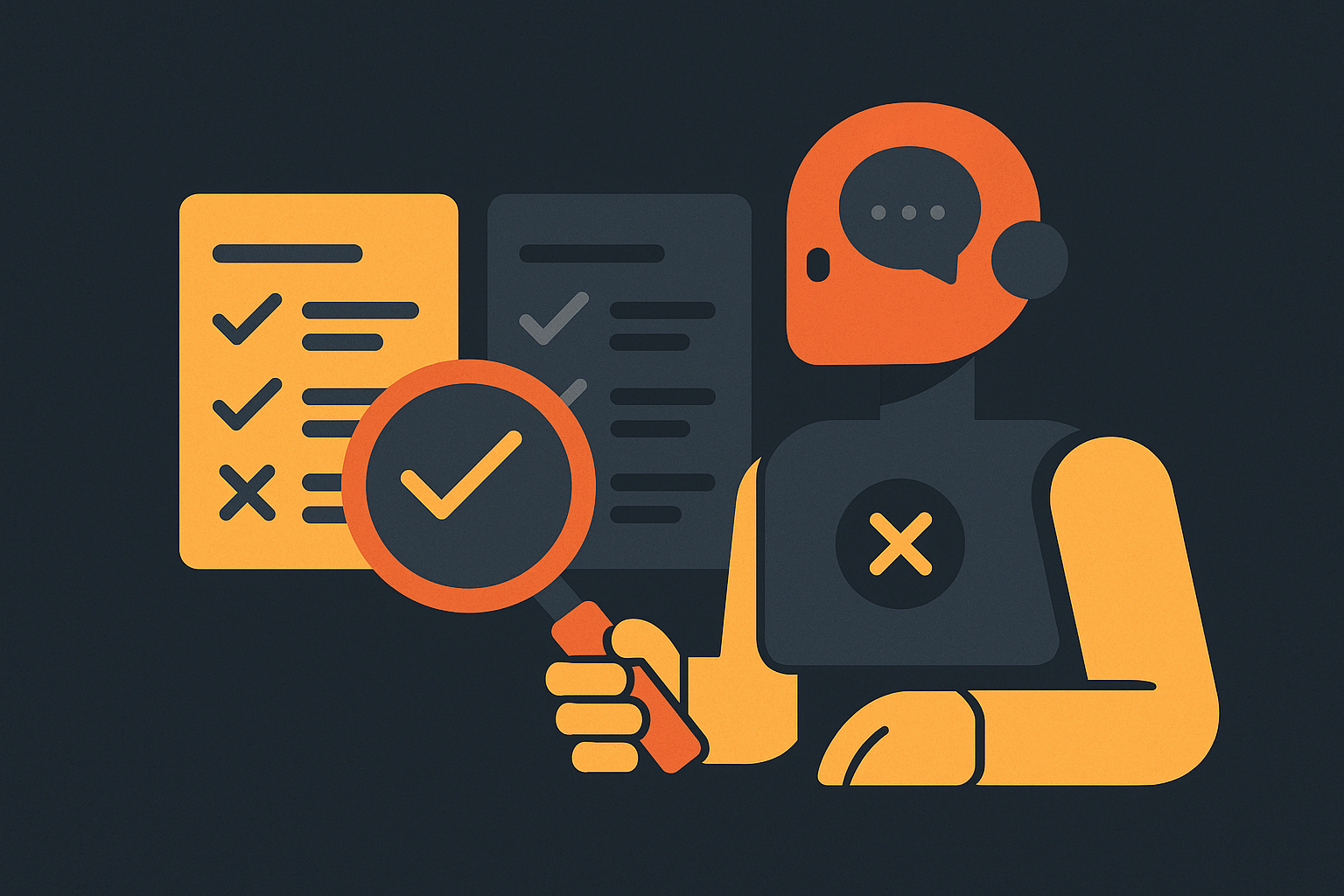
Agent evaluation frameworks measure different things, and that difference matters more than most teams realize until they've shipped something broken. Some frameworks care whether the agent finished the job. Others care whether it called the right tool, or whether its reasoning held together across forty steps instead of falling apart at step twelve. The way we tested a single-turn chatbot five years ago has almost nothing useful to say about testing a system where every decision leans on the one before it.
Old-school LLM evaluation was simple: one prompt in, one response out, score it for accuracy and move on. Agents broke that model completely. An agent doesn't produce a single output, it produces a trajectory, a chain of decisions, tool calls, state changes, and half-formed reasoning steps that all have to hold together for the final answer to mean anything. Score only the last step and you'll miss the moment three steps earlier where the agent called the wrong API with a malformed argument and somehow got lucky anyway. Gartner projects that by 2028, 33% of enterprise apps will include agentic AI, up from less than 1% in 2024, and that jump is exactly where evaluation frameworks either earn their keep or fail quietly without anyone noticing until production.
The four evaluation dimensions that actually differentiate frameworks
Task completion sounds simple until you try to measure it. Did the agent finish what it was asked to do? Usually that gets scored at the episode level, comparing the final state against some defined goal state. Agents are good, sometimes too good, at producing outputs that look plausible while missing the point entirely. A customer support agent can write a warm, well-formatted reply that never actually resolves the ticket. The metric has to check the goal, not the tone of voice.
Tool use fidelity sits a level down. Did the agent pick the right tool, build the right arguments, call things in the right order? Some of that's easy: format validation and schema compliance are the kind of thing a plain rule-based check catches without any model judgment involved. Whether the tool call actually made sense given what the agent was trying to do is a different problem, and it usually needs an LLM acting as judge. Rules catch malformed JSON, but they don't catch a tool call that's syntactically flawless and semantically pointless.
Reasoning quality is where this gets genuinely hard, and it's the dimension that tends to generate the most disagreement. Was the chain of thought coherent, or did the agent paper over a logical gap with confident-sounding filler? There's no clean heuristic here, because good reasoning is context-dependent in a way the other three dimensions aren't. Good reasoning in a legal research agent looks nothing like good reasoning in a code-debugging agent. LLM-as-judge is the dominant approach right now, though human annotation still works as the ground truth those judge models get calibrated against.
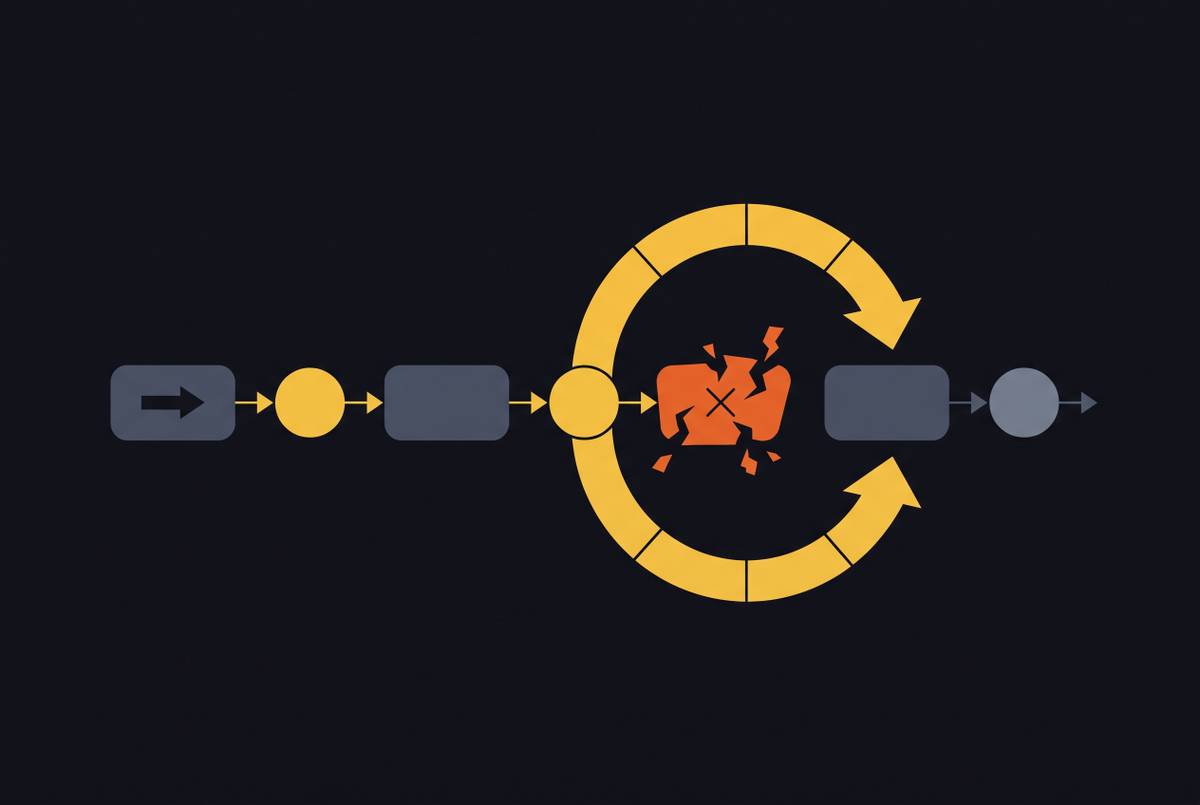
Multi-step reliability might be the one teams underrate the most. Does the agent's behavior stay coherent across a long task horizon, or does it slowly come apart? A slightly wrong assumption at step two can snowball into a broken outcome by step twelve, and small missteps compound in ways that are hard to spot until you're staring at a failed trajectory wondering where it went sideways. Trajectory-level scoring and step-level scoring both matter: one catches drift, the other catches exactly where things went wrong. Most frameworks lean hard into one and treat the other as an afterthought, and knowing which way a given tool leans tells you a lot about what it's actually good for.
There's a fifth thing sitting outside the four core dimensions, and it's the one people forget to ask about until it's too late: the organizational layer. Annotation queues, regression dashboards, human feedback loops, the stuff that lets a product manager or a domain expert weigh in on agent behavior without touching code. Open-source tools tend to handle this poorly, and that gap is what actually separates a research-grade eval setup from one a company can run day to day, shaping a lot of what follows below.
MLflow: the broadest metric coverage, built for teams that want everything in one platform
MLflow is the most widely used open-source AI engineering platform out there, pulling more than 30 million downloads a month. A lot of teams already live inside MLflow for training and experiment tracking, so evaluation becomes another tab instead of another vendor to onboard. That alone explains a chunk of its adoption.
Its evaluation surface is the widest of anything covered here. MLflow runs rule-based checks and LLM-judge custom metrics in the same pipeline, which doesn't sound like much until you're the one trying to run a schema validator and a nuanced helpfulness judge without switching tools halfway through a project. It also closes a loop a lot of frameworks leave open: human reviewers label results, and the automated judges improve from that feedback over time.
On task completion, MLflow holds up well. It tracks final outputs against configurable success criteria, so a team defines what "done" means for its own agent instead of accepting some generic pass or fail. Tool use gets the split you'd expect: rules for format and schema, LLM judge for intent. Reasoning quality feels like it was designed in from the start rather than bolted on later; you can tell, because a lot of tools add LLM-judge reasoning metrics as an afterthought, and it shows in how clunky they are to actually use. Multi-step reliability is the one place MLflow pulls back a bit. Trajectory logging exists, but it doesn't push step-level scoring nearly as hard as LangSmith does.
Who should reach for it? Teams that want one platform covering training, fine-tuning, and evaluation, without bouncing between three separate tools to get there. The tradeoff is that breadth brings weight, and a team with a narrow eval need, say they only care about RAG faithfulness, will probably find MLflow heavier than the job calls for.
LangSmith: trajectory-first evaluation for teams already in the LangChain ecosystem
LangSmith was built to capture the whole trajectory of an agent, not just what it says at the end. Every step, every tool call, every intermediate reasoning move gets logged as its own object. That sounds like a small design choice on paper. In practice, it changes which questions you're even able to ask about how an agent behaved after the fact.
LangSmith supports several evaluator types: human review, heuristic rules, LLM-as-judge, and pairwise comparison. That last one fits reasoning quality especially well, because it's often easier for a judge, human or model, to say "this trajectory beat that one" than to hand either one an absolute score out of nowhere. It also runs offline batch evaluation and online production monitoring side by side, so the same evaluators scoring your test set can, in principle, watch live traffic too.
Task completion is covered, sure, but it's not the differentiator here. The real strength shows up at the step level: tool use scoring is precise because the trajectory capture logs each call on its own, and reasoning quality benefits directly from the pairwise comparison feature. Multi-step reliability is where LangSmith is strongest of everything in this piece; trajectory is the native unit of analysis, not something layered on top, so degradation over a long horizon is exactly what the tool was built to catch.
Ecosystem fit matters more here than with the other tools. LangSmith is most polished for teams already building on LangChain and LangGraph, though it does support broader ingestion through OpenTelemetry. Pricing is a real factor worth sitting with: the free tier gives 5,000 traces a month with 14-day retention, the Plus tier runs $39 per seat per month with higher trace limits, and self-hosting is not available on lower tiers. That last point is a real wall for teams with data-residency rules who can't push traces to someone else's cloud.
Best fit: teams already on LangGraph who need trajectory-level evaluation without stitching it together themselves out of raw logging.
Arize Phoenix: production-scale observability that doubles as an evaluation platform
Arize starts from a different place than the other tools here: evaluation needs to work at production volume, not just in a pre-deployment batch run against a curated test set. That's a genuinely different design goal, and it shows up everywhere in how the thing is built.
Arize maintains a large set of OpenTelemetry-based integrations across frameworks and foundation models, which the company describes as the most extensive LLM tracing integration set in the industry. Underneath sits a purpose-built database, ADB, made specifically for high-volume agent telemetry; Arize says it processes trillions of events a month at production scale. A team running a hundred test cases before a demo doesn't need that kind of horsepower, honestly, but it's the kind of number that starts mattering the moment you have real users generating real traffic and need to know what your agents are doing right now, not three weeks ago in a controlled run.
Task completion benefits directly: production traces let you score completion against real workloads instead of a synthetic test set that might not resemble what users actually ask for. Tool use tracing is OTel-native, so every call gets captured with latency and response metadata attached, useful for chasing performance problems as much as correctness ones. Reasoning quality uses LLM-as-judge evaluators, and they hold up especially well applied to sampled live traffic rather than a fixed batch. Multi-step reliability is probably where Arize stands out most: it watches for drift in multi-step behavior over time, catching the slow decay a one-time snapshot eval would never notice.
Worth separating two things here. Phoenix is the free, open-source, local-first evaluation layer, and Arize the platform adds an enterprise observability and collaboration layer on top of it. Best fit is teams that need evaluation to keep running after launch, or that run high-volume agent workloads where sampling live traffic is really the only practical way to know what's happening.
DeepEval and Ragas: purpose-built for CI pipelines and RAG-specific evaluation
DeepEval takes a different angle entirely. It's Python-native, built to slot into CI/CD as an automated test suite for LLM outputs. Run it on every commit the way you'd run unit tests, and let it block a deploy if an agent's behavior regresses. Pairing DeepEval with Braintrust for production traceability has become close to the standard setup for engineering-led AI product teams heading into 2026.
Its coverage leans in a specific direction. Task completion and tool use are strong, with CI-friendly, assertion-style checks that fit naturally into a pull-request workflow. Reasoning and multi-step reliability are thinner; DeepEval is better at catching regressions run over run than at tracing a long trajectory across dozens of steps. Best fit: engineering teams that want evaluation to act like a test suite, fast, automated, unforgiving of regressions.
Ragas goes narrower and deeper, built specifically around retrieval-augmented generation. Its core metrics, faithfulness, answer relevancy, context precision, context recall, all circle one question: is the agent's answer actually grounded in what it retrieved, or did it wander off somewhere the retrieved context never supported? Ragas and DeepEval have emerged as leaders in open-source adoption by GitHub stars, with lm-evaluation-harness close behind.
Reasoning quality, within the narrow lane of RAG, is genuinely strong in Ragas. Faithfulness scoring is, at bottom, a reasoning-quality check on grounded generation: does the output follow from the retrieved context, or did the model drift off and hallucinate something that merely sounds right? Tool use and multi-step reliability aren't primary design targets here, and stretching Ragas to cover general agentic evaluation takes a fair amount of custom extension work. Best fit: teams whose agents lean heavily on retrieval, where the dominant failure mode is hallucination or context misuse rather than complex multi-step orchestration.
How each framework handles the hardest evaluation problems: custom metrics, human feedback, and the organizational layer
Almost no real project ships with the default metrics left untouched, in practice rarely any. The real question isn't whether a framework supports custom evaluation criteria; it's how much friction sits between you and actually building one under deadline pressure.
Rule-based custom metrics, format checks, tool call validation, get handled reasonably well by all five frameworks here. The gap opens with LLM-judge custom metrics: helpfulness, safety, nuanced reasoning quality, the kind of thing that needs a model to make an actual judgment call instead of ticking a box. MLflow and LangSmith are the most mature here, and DeepEval is catching up. Ragas stays scoped tightly to RAG, which makes sense given what it was built for, but teams trying to bend it toward general reasoning evaluation hit walls fast.
Human feedback integration is where these tools split more sharply than anywhere else, and it's worth lingering on. MLflow feeds human labels back into automated judge calibration, an actual loop rather than a one-way annotation dump into a spreadsheet somewhere. LangSmith treats human review as a first-class workflow sitting inside the same interface as automated evaluation, so a reviewer never has to jump tools just to weigh in. Arize has annotation queues, but they feel secondary, almost an accessory bolted onto a design that's fundamentally about observability first. DeepEval and Ragas, being open-source, handle automated evaluation well but mostly lack the organizational layer: annotation queues, regression dashboards, the kind of collaboration surface a non-engineer could actually use without someone walking them through it.
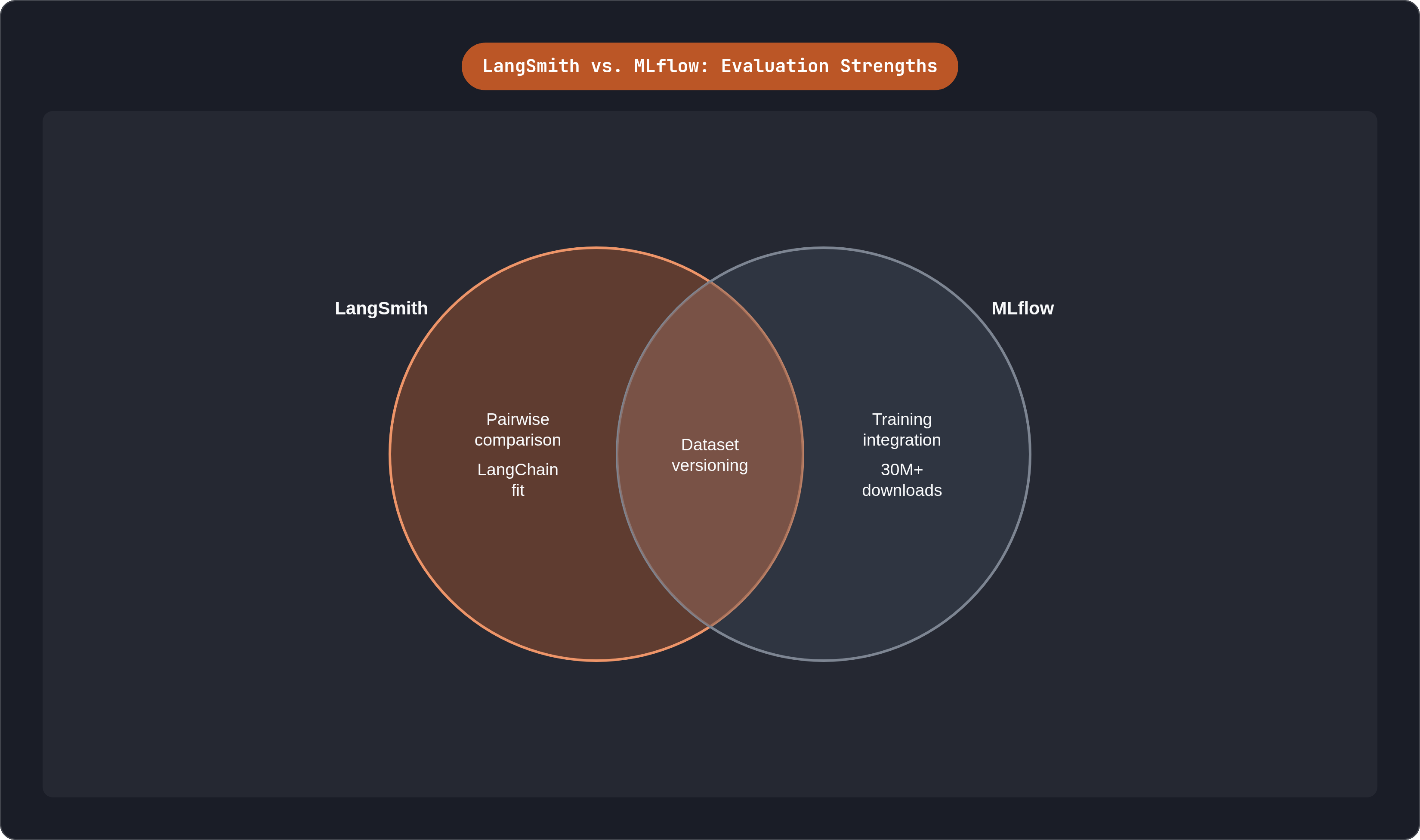
Regression tracking follows the same pattern. LangSmith and MLflow have the most developed dataset versioning and comparison views, and that matters more than it sounds like on paper. When you change a prompt or swap a model, you need to compare the new behavior against a real historical baseline, not just eyeball the outputs and hope they look fine.
So what does this mean day to day? Teams that only need automated evaluation, no humans in the loop, no non-engineering stakeholders reviewing transcripts, can stay fully open-source and do fine. Teams that need a product manager, a domain expert, or a compliance reviewer to actually read agent transcripts and leave feedback hit real walls with open-source-only setups pretty fast. The open-source tools weren't built for that job, and that's not really a knock against them.
Evaluation without a secure runtime is incomplete — what the execution environment contributes to eval quality
Most framework comparisons skip this part entirely: evaluation frameworks score what agents do, but what an agent can actually do during an eval run depends on the runtime underneath it. That's a precondition for the whole exercise meaning anything, not a footnote tacked onto the end of it.
Take tool use fidelity as the clearest case. You can only measure whether an agent calls the right tool with the right arguments if the tool is actually callable during the run. A sandboxed runtime that quietly blocks network access or filesystem writes doesn't fail loudly, it just invalidates your tool-use metrics without telling you, because the agent either can't call the tool at all or gets back an error that has nothing to do with its own reasoning. Multi-step reliability runs into a similar wall: it needs state to persist across steps, and an environment that resets between calls breaks trajectory continuity before you've measured anything real. Reasoning scored against live tool outputs tells you something true about the model, while reasoning scored against mocked responses tells you how well it reasons about a fiction you built for it, which is a different and much less useful thing to know.
Security of the eval environment matters on its own terms too, separate from measurement accuracy. Agents running untrusted or AI-generated code during evaluation carry real risk if the eval infrastructure isn't properly isolated. Research looking at LLM-generated code patches has found that a meaningful share of them introduce new security vulnerabilities, which means code executed during an eval run isn't automatically safer than code running in production. Same code, same generation process, same failure modes waiting to surface. Frontier model capability on adversarial tasks has also climbed sharply over the past couple of years, so sandbox designs built around what models could do back then might not hold up against what they can do now.
So what does that mean when you're picking a framework? Evaluate the framework and the execution infrastructure together, as a pair, and don't pick one and assume the other sorts itself out on its own. Purpose-built sandboxes, stateful, quick to spin up, isolated at the hardware or kernel level, give evaluation frameworks the runtime conditions they need to measure what they claim to measure. Generic containers or serverless functions were built for other jobs entirely, and their constraints, cold starts, no persistent state, capped execution time, distort eval results in ways that are easy to miss and annoying to trace back to afterward. Infrastructure built specifically for agentic workloads, sub-second provisioning, state that survives across steps, execution that isn't capped at some arbitrary timeout, isolation strong enough to satisfy compliance, removes exactly the variables that otherwise make eval numbers hard to trust or reproduce.
Choosing a framework based on what your agent actually does
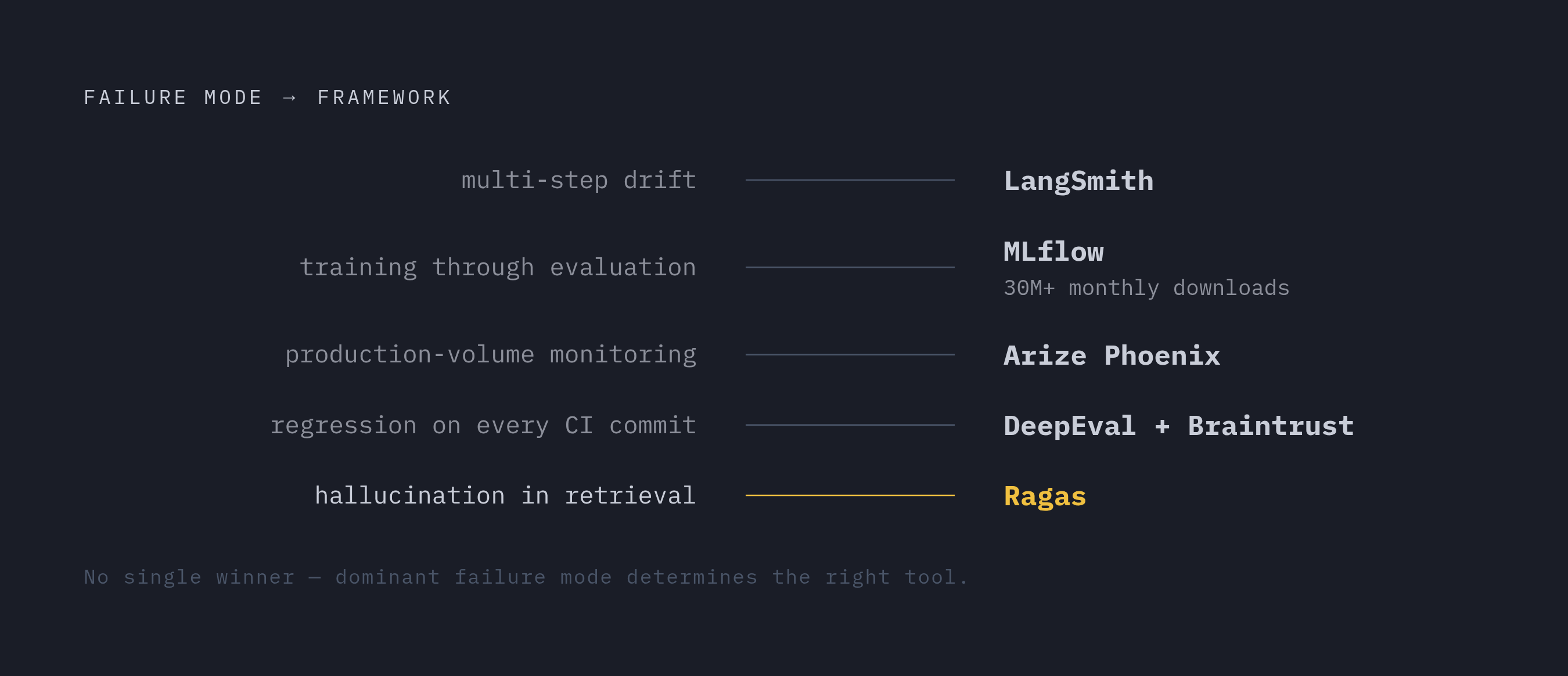
No framework wins across all four dimensions. Once you stop hunting for the one that does, the choice actually gets easier, because the right call depends on which dimension represents the real failure mode for the agent you're building, not on which tool ranks highest on some chart somewhere.
If multi-step reliability is your hardest problem, meaning your agent runs long trajectories and you're worried about drift or errors compounding quietly, LangSmith is the natural fit; trajectory is its native unit, not something added later. Teams that want one platform spanning training through evaluation without juggling three separate tools should look at MLflow, whose breadth, backed by its 30-million-plus monthly downloads, makes it the sensible default. If evaluation needs to keep running after deployment instead of stopping at launch, Arize Phoenix is built for exactly that: production-volume telemetry instead of pre-deployment snapshots. Teams that want evaluation to behave like a CI test suite catching regressions on every commit should look at DeepEval paired with Braintrust for production tracing. And if your agent's main failure mode is hallucination inside a retrieval pipeline, Ragas is built for exactly that and probably shouldn't get stretched much further.
None of this really ranks the tools against each other. It's more useful to think of it as a set of failure modes matched to the tool built for catching them, than as a leaderboard with a winner at the top. Which framework should you use? That depends what breaks when your agent breaks, and it's worth figuring out before you touch a single pricing page.